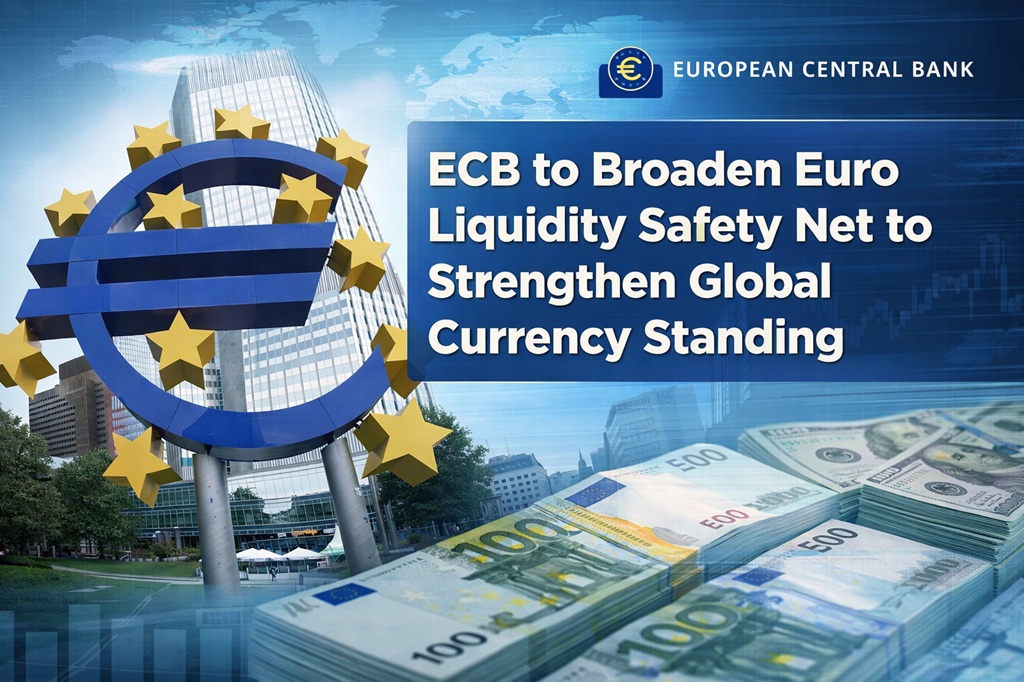

FRANKFURT – The European Central Bank (ECB) is widely expected to increase interest rates this week as escalating tensions in the Middle East drive up energy prices and reignite inflationary pressures across the eurozone.
The ECB had kept borrowing costs unchanged for an extended period after inflation in the 20-member single currency bloc showed signs of stabilising. However, the ongoing conflict involving Iran and the near-complete disruption of shipping through the Strait of Hormuz have sent global oil and gas prices sharply higher, raising concerns over a fresh wave of inflation.
Latest data showed consumer prices in the euro area climbed 3.2 per cent in May, well above the ECB’s medium-term target of two per cent.
Economists broadly expect the Frankfurt-based central bank to raise its key deposit rate by 25 basis points to 2.25 per cent when policymakers meet on Thursday.
ING chief economist Carsten Brzeski said a rate increase is now the most likely outcome, noting that financial markets would be surprised if the ECB chose to leave rates unchanged.
Higher interest rates are typically used to curb inflation by reducing consumer spending and business investment, although they can also weigh on economic growth.
Unlike the ECB, other major central banks, including the US Federal Reserve and the Bank of England, have maintained a cautious approach by holding interest rates steady while assessing the economic impact of the Middle East conflict.
If approved, Thursday’s increase would mark the ECB’s first rate hike since September 2023. After aggressively tightening monetary policy to combat inflation triggered by Russia’s invasion of Ukraine, the bank later shifted to a series of rate cuts before keeping policy unchanged since mid-2025.
Inflation Risks Take Centre Stage
Several senior ECB officials have recently indicated that tighter monetary policy may be necessary.
Chief Economist Philip Lane suggested that the bank’s updated economic projections would likely reflect higher inflation expectations, citing the impact of the Iran conflict on energy markets and the broader economic outlook.
He warned that multiple factors linked to the geopolitical crisis had worsened the macroeconomic environment, increasing the risk of sustained price pressures.
However, some economists argue that raising interest rates could further slow an already fragile eurozone economy by making borrowing more expensive for households and businesses.
The European Union recently lowered its 2026 growth forecast for the eurozone to 0.9 per cent from an earlier estimate of 1.2 per cent, while revised figures showed the region’s economy contracted by 0.2 per cent during the first quarter.
Balancing Inflation and Growth
Allianz chief economist Ludovic Subran said an interest rate increase would help reassure markets that the ECB remains committed to controlling inflation.
At the same time, he questioned whether immediate action was necessary, arguing that the central bank could afford to wait given the clear signs of slowing economic activity.
ECB policymakers may nevertheless be reluctant to delay action after facing criticism for responding too slowly to the inflation surge that followed the pandemic and the Ukraine war.
Investors will closely watch ECB President Christine Lagarde’s remarks after the policy decision for indications of future rate moves, although analysts expect her to avoid giving firm guidance.
Most economists believe the current situation differs significantly from the inflation shock of 2022, as underlying price pressures are less widespread and supply chain disruptions have largely eased.
As a result, analysts expect any tightening cycle to be limited rather than the beginning of a prolonged series of aggressive rate hikes.
Capital Economics deputy chief eurozone economist Jack Allen-Reynolds expects the ECB to deliver one additional increase at its next meeting before pausing, arguing that the inflationary impact of higher energy prices is likely to remain contained.