JAKARTA— Indonesia is preparing a nationwide push to integrate artificial intelligence into government operations, with plans to deploy the technology across major public programmes ranging from food assistance and healthcare to administrative services and economic planning.
The initiative forms part of a broader national strategy aimed at accelerating digital transformation while positioning Southeast Asia’s largest economy as a more competitive player in the global AI landscape.
According to a draft presidential regulation currently under government review, ministries and regional authorities would be required to incorporate AI technologies between 2026 and 2029 to improve efficiency, strengthen decision-making and support key national priorities.
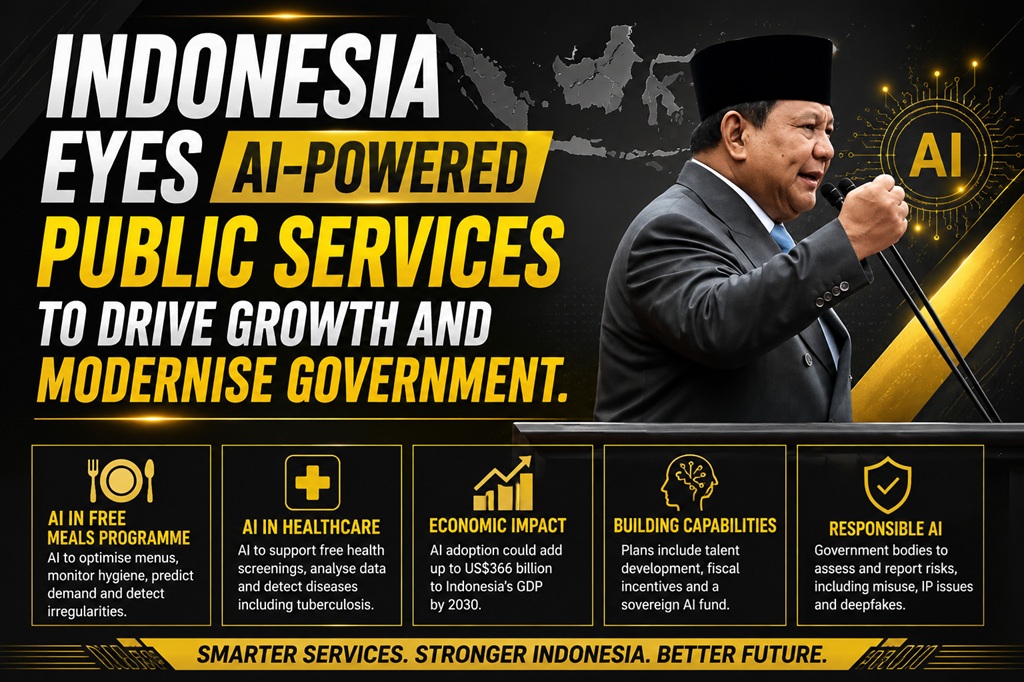
The proposed framework reflects Jakarta’s ambition to harness emerging technologies as a catalyst for economic expansion. Government projections suggest widespread AI adoption could contribute hundreds of billions of dollars to the economy by the end of the decade and significantly boost national productivity.
One of the most prominent applications would involve President Prabowo Subianto’s flagship free school meals programme. Authorities are exploring the use of AI systems to optimise menu planning, forecast food requirements, monitor hygiene standards and identify operational irregularities across thousands of distribution centres nationwide.
The technology could also be integrated with public health databases to provide early warnings of potential emergencies and improve nutritional monitoring among beneficiaries.
Beyond food assistance, the government intends to utilise AI in healthcare programmes, including disease screening, medical data analysis and tuberculosis detection efforts, with the goal of expanding access to preventive healthcare services.
Indonesia’s move comes as regional competition in artificial intelligence intensifies. Countries such as Singapore and Malaysia have attracted substantial investments from global technology companies seeking to expand cloud computing and AI infrastructure throughout Southeast Asia.
Industry giants including Microsoft, Meta and IBM have reportedly participated in consultations related to the country’s AI development framework, highlighting growing international interest in Indonesia’s digital ambitions.
Despite the optimism, experts caution that Indonesia still faces significant challenges in building a competitive AI ecosystem. Infrastructure limitations, shortages of advanced computing capabilities and a relatively small pool of specialised AI talent remain key obstacles.
Analysts note that without major investments in research, education and digital infrastructure, Indonesia risks remaining primarily a consumer of imported AI technologies rather than emerging as a leading developer of advanced solutions.
To address these concerns, the proposed strategy includes plans for fiscal incentives, talent development programmes and the establishment of a sovereign AI fund designed to support long-term innovation and technological self-reliance.
The government is also expected to introduce safeguards governing the responsible use of AI. Public agencies would be required to assess and report potential risks associated with emerging technologies, including biometric misuse, intellectual property concerns, misinformation and AI-generated deepfakes.
If approved, the initiative would mark one of Indonesia’s most ambitious technology-driven reform programmes to date, signalling a strong commitment to embedding artificial intelligence at the heart of public sector transformation and future economic growth.