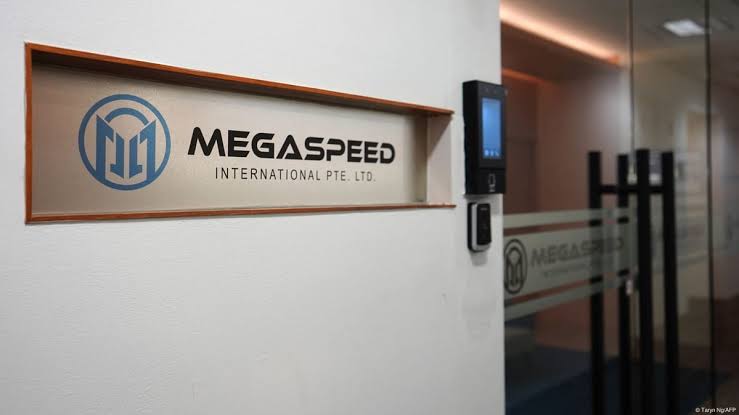
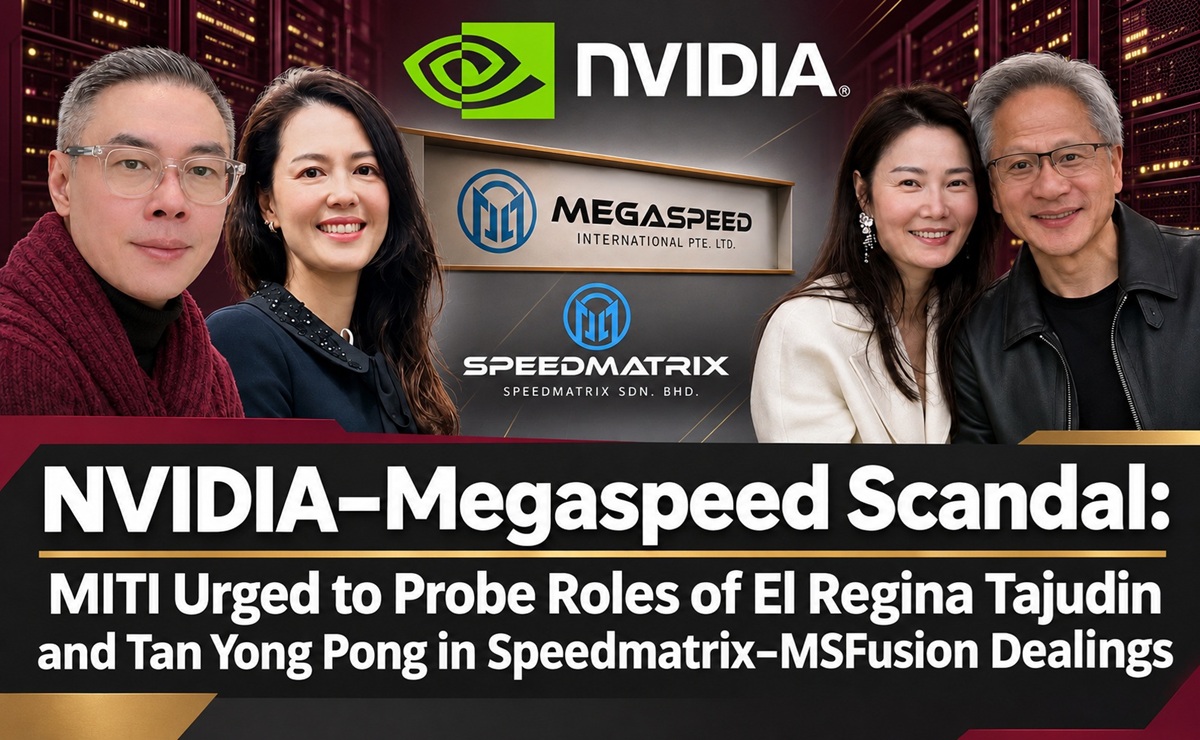
Speedmatrix Sdn Bhd reported nearly RM8.86 billion in assets in its first financial period. MSFusion Sdn Bhd committed to a RM263.21 million land acquisition after closing its maiden accounts with no revenue and just RM1 in share capital.
As scrutiny of NVIDIA and Megaspeed intensifies internationally, the financial positions and corporate structures of the two Malaysian companies raise questions over who financed their transactions, who owns the underlying assets and where responsibility for compliance lies.
The figures provide grounds for the Minister of Investment, Trade and Industry to examine the funding arrangements, ownership structures and decision-making roles of the parties involved, including Tan Yong Pong and El Regina Bte Tajudin.
That examination must distinguish between the companies’ respective activities: operating AI servers and chips, and developing the data centres that could house them.
MITI says no compliance clearance was issued
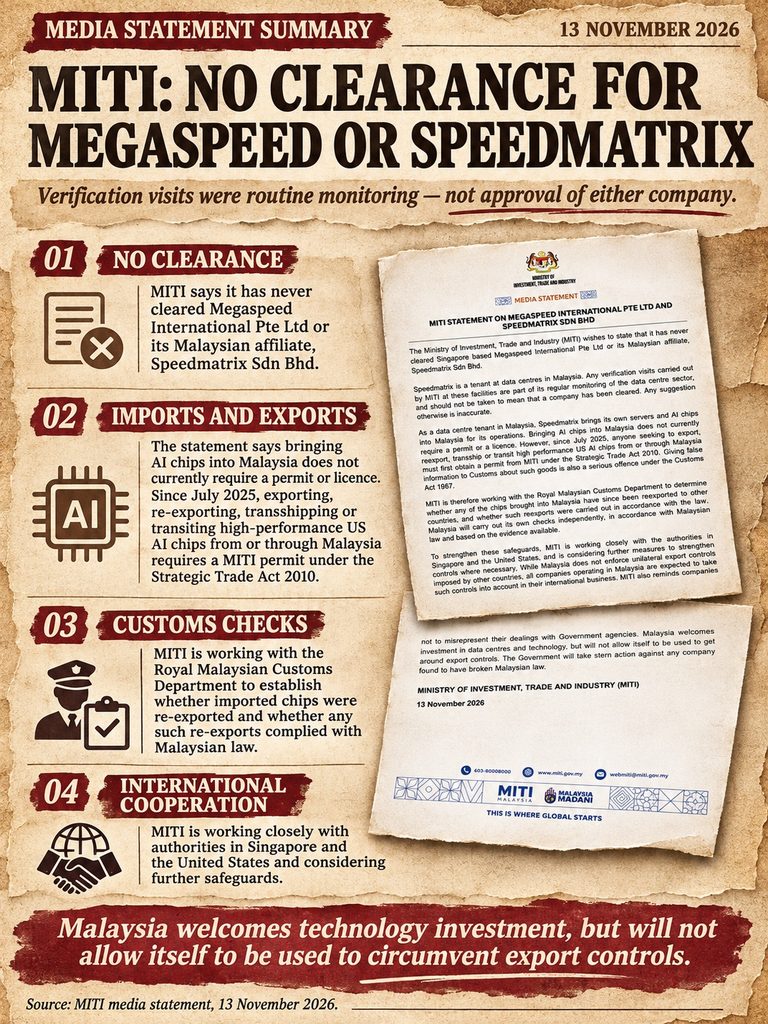
On Nov 13, 2026, the Ministry of Investment, Trade and Industry (MITI) said it had never granted compliance clearance to Megaspeed International Pte Ltd or its Malaysian affiliate, Speedmatrix.
According to the ministry, Speedmatrix is a tenant at Malaysian data centres and imports its own servers and artificial intelligence chips. MITI’s verification visits formed part of routine monitoring of the data centre sector and did not constitute compliance clearance.
The ministry is working with the Royal Malaysian Customs Department to establish whether imported chips were subsequently re-exported and whether their movements complied with the law.
Its statement did not announce findings of wrongdoing against either Speedmatrix or MSFusion.
Speedmatrix: RM522 million revenue, RM103 million loss
Companies Commission of Malaysia (SSM) records show that Speedmatrix was incorporated on Feb 7, 2024, to undertake data processing, hosting infrastructure and related activities.
Megaspeed International owns all 2.5 million shares in the company. Its issued share capital of RM2.5 million was paid in cash.
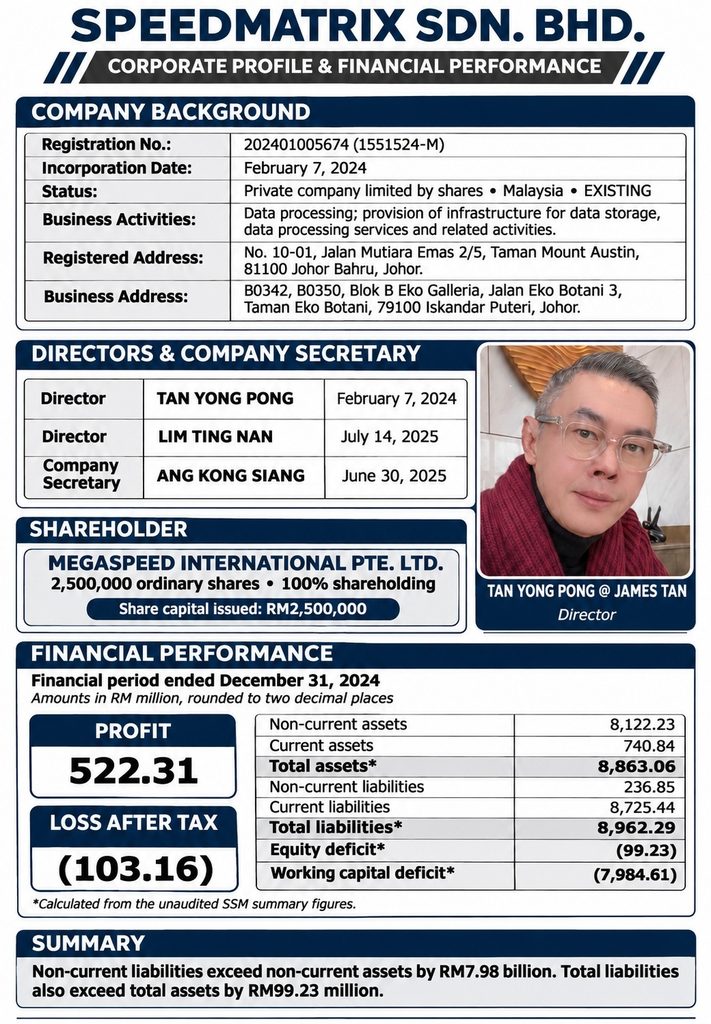
For the financial period ended Dec 31, 2024, Speedmatrix generated revenue of RM522.31 million but recorded a pre-tax and after-tax loss of RM103.16 million.
Non-current assets stood at RM8.122 billion, while current assets amounted to RM740.84 million. Total liabilities of approximately RM8.962 billion exceeded total assets of about RM8.863 billion, leaving an equity deficit of roughly RM99.23 million.
The more immediate pressure was on liquidity.
Current liabilities of RM8.725 billion exceeded current assets by almost RM7.985 billion. Its current ratio stood at approximately 0.085 times, indicating a substantial gap between current assets and short-term obligations at the reporting date.
The SSM summary, however, does not disclose the composition of those assets, the identities of creditors or repayment terms. Full financial statements would be needed to establish whether the liabilities comprise equipment financing, related-party balances or facilities supported by other funding arrangements.
SFAI Malaysia PLT is listed as the auditor, with the audit report recorded as unqualified.
The records also show an outstanding charge dated June 18, 2024, in favour of an entity whose name is truncated as “APEX Enterprise Solutions (Singapore) Private Limi…”.
The charge is marked “unsatisfied”, meaning it has not been recorded as discharged. That status alone does not establish a payment default.
MSFusion’s RM263 million land commitment
MSFusion was incorporated on March 7, 2024, a month after Speedmatrix.
For the financial period ended Dec 31, 2024, it reported no revenue and a loss of RM16,149. Current assets stood at RM6,433 against current liabilities of RM22,581.
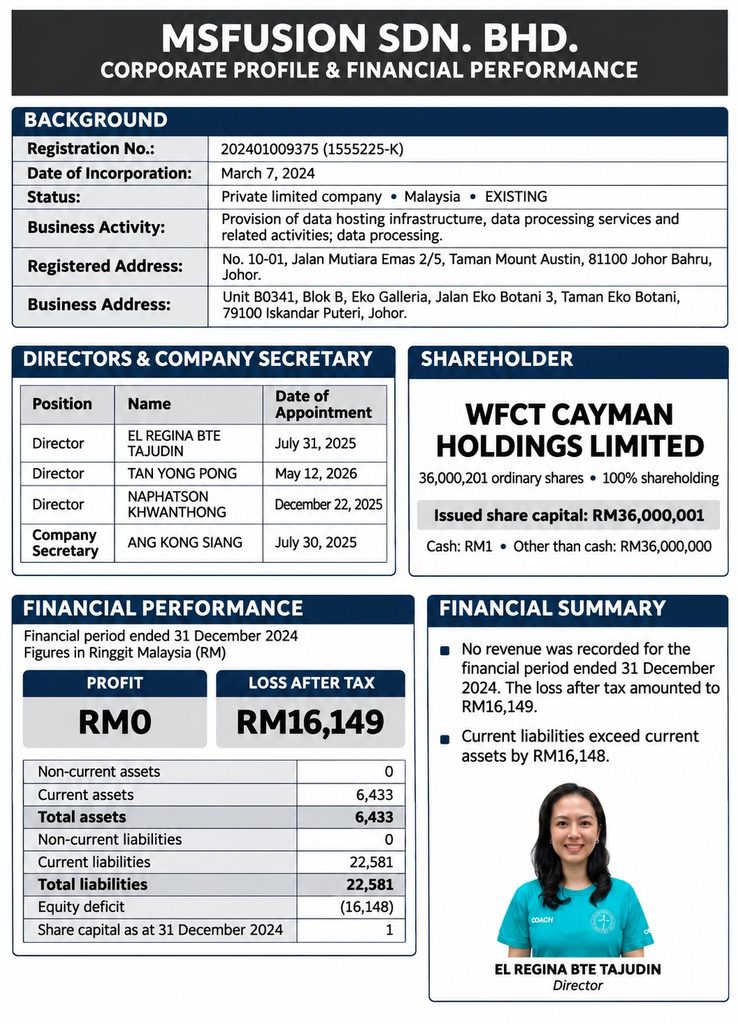
With share capital of RM1 and no non-current assets, the company closed the period with an equity deficit of RM16,148.
On Aug 29, 2025, Crescendo Corporation Bhd announced that its subsidiary, Crescendo Development Sdn Bhd, had entered into a conditional agreement to sell land to MSFusion.
The transaction involved 52.544 acres of freehold industrial land at Bandar Cemerlang Industrial Park in Kota Tinggi, Johor, for RM263.21 million, or RM115 per sq ft. The land was intended for a data centre development.
The commitment dwarfed MSFusion’s initial financial position. Its 2024 accounts nevertheless predated the land agreement and cannot be treated as a complete picture of its funding capacity in 2025 or 2026.
An SSM profile dated Nov 12, 2026, shows that share capital had risen to RM36,000,001, including RM36 million issued for consideration other than cash.
That increase should not be equated with a cash injection available to fund the land purchase. The nature of the consideration, its valuation and the acquisition’s financing arrangements require supporting documentation.
Delayed payment, followed by settlement
The land transaction subsequently encountered a payment delay.
On Aug 27, 2026, Crescendo disclosed outstanding principal of approximately RM225.91 million and granted a 14-day period to remedy the default.
On Sept 9, 2026, it confirmed that the balance purchase price, together with late-payment interest up to Aug 26, had been paid in full to the vendor’s solicitors.
The announcement did not identify the source of funding.
Both developments matter: the record shows a payment delay followed by confirmation that the outstanding purchase price had been settled. The remaining questions concern how that settlement was financed and how MSFusion’s financial position evolved after its 2024 accounts.
Where Tan Yong Pong and El Regina fit in
SSM records list Tan Yong Pong as a director of both companies. He was appointed to Speedmatrix on Feb 7, 2024, and to MSFusion on May 12, 2026.
Lim Ting Nan also sits on Speedmatrix’s board. El Regina Bte Tajudin and Naphatson Khwanthong are listed as directors of MSFusion.
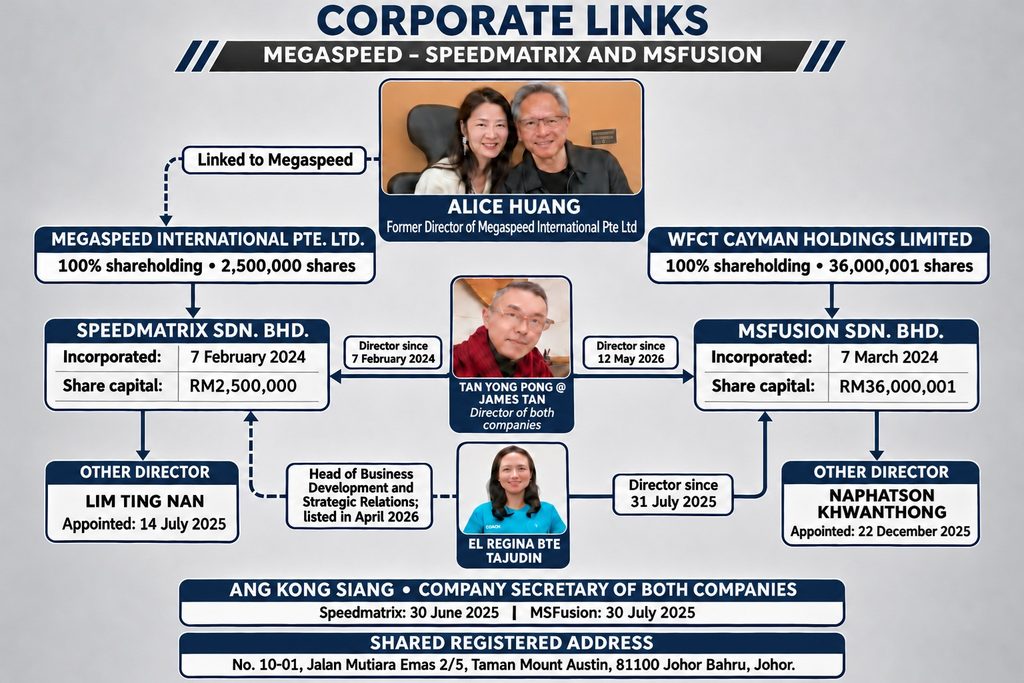
The companies share a company secretary, Ang Kong Siang, appointed to Speedmatrix on June 30, 2025, and to MSFusion on July 30, 2025.
They also have the same registered address at No. 10-01, Jalan Mutiara Emas 2/5, Taman Mount Austin, Johor Bahru. Their business addresses are at separate units in Eko Galleria, Iskandar Puteri.
These overlaps make their administrative and management relationships relevant to an examination of the transactions.
Tan and El Regina are among those positioned to explain transaction approvals, the allocation of responsibilities and MSFusion’s relationship with the wider operations. A directorship, by itself, does not establish involvement in wrongdoing.
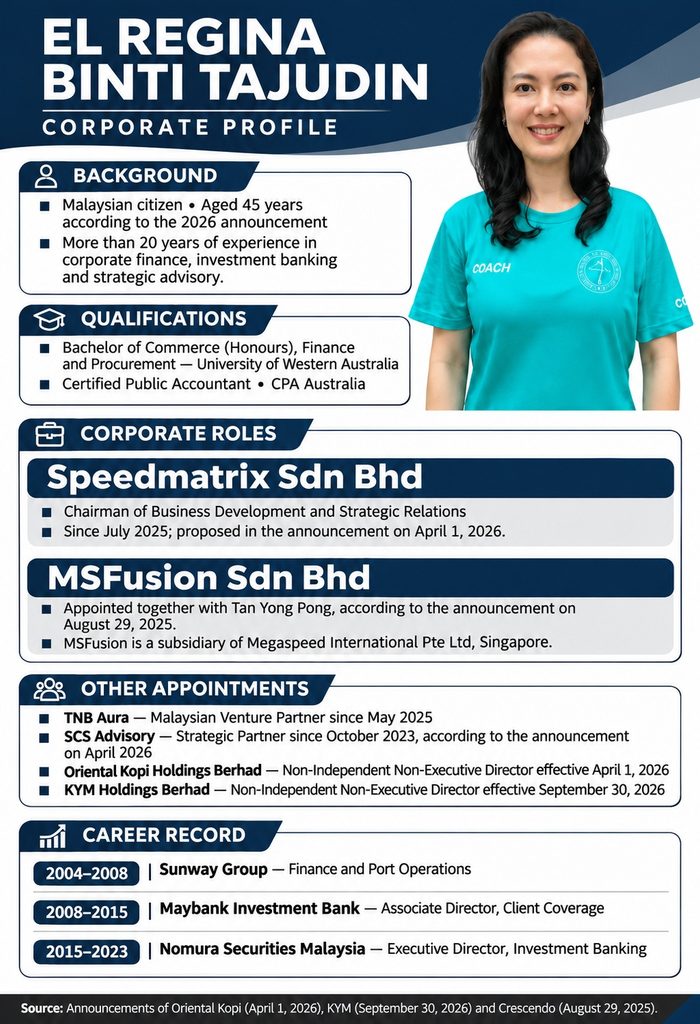
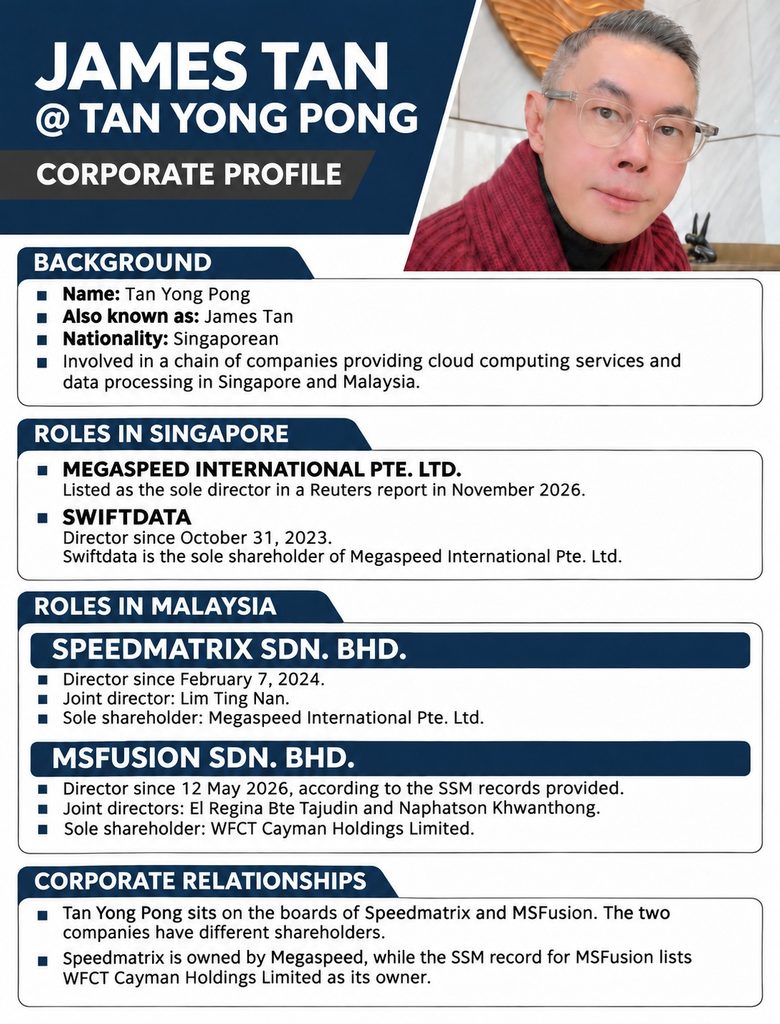
Ownership must also be distinguished from board membership.
Speedmatrix is wholly owned by Megaspeed International. MSFusion’s November 2026 SSM profile, meanwhile, identifies WFCT Cayman Holdings Limited as its sole shareholder, holding 36,000,001 shares.
Crescendo’s earlier announcement described MSFusion as a Megaspeed subsidiary. The relationship between that description and the latest direct shareholding record requires clarification of the ownership chain and any intervening changes.
The documents reviewed for the original article do not identify the individuals who ultimately beneficially own MSFusion through WFCT.
International scrutiny reaches Malaysia
The questions surrounding the Malaysian operations come amid international attention on NVIDIA’s relationship with Megaspeed.
Le Monde reported that Megaspeed, through Speedmatrix, purchased at least US$4.8 billion worth of NVIDIA equipment between June 2024 and February 2026.
The report also linked Alice Huang to the controversy surrounding Jensen Huang and to espionage allegations denied by the Chinese government. Those allegations are separate from the question of whether the Malaysian companies’ transactions complied with applicable laws.
Megaspeed has reportedly said it is cooperating with US inspections and has appointed a US law firm to lead a GPU inventory count and an independent verification of its export-control compliance practices.
Follow the equipment and the funding
For Malaysian authorities, the next step is to connect corporate disclosures with the underlying transactions.
Purchase invoices and financing records can be matched against equipment serial numbers, shipping documents, installation locations and physical inventories at data centres.
Where equipment has been re-exported, the relevant permits, destinations and end recipients become central to establishing compliance.
MITI said that, since July 2025, the export, re-export, transshipment or transit of high-performance US AI chips from or through Malaysia has required a permit under the Strategic Trade Act 2010.
For MSFusion, an examination should establish whether its role is confined to data centre development or extends to the ownership, financing or use of equipment.
Any operational relationship with Speedmatrix should be established through agreements and transaction records. Shared addresses and directors provide context, but do not establish the substance of that relationship.
Speedmatrix’s asset base and liquidity gap, alongside MSFusion’s substantial land commitment, warrant fuller explanations from the parties involved.
The case for closer scrutiny rests on those financial and corporate questions. Any finding of a legal breach must rest on transaction evidence and the outcome of the authorities’ investigations.