
The United Kingdom economy delivered a stronger-than-expected performance in February, offering a brief sign of resilience before mounting geopolitical risks begin to weigh on the outlook.
According to data released by the Office for National Statistics, gross domestic product (GDP) expanded by 0.5% month-on-month — significantly outperforming market expectations of just 0.2%.
The growth was largely driven by broad-based strength in the services sector, which continues to underpin the UK economy. At the same time, manufacturing activity received a boost as car production rebounded following earlier disruptions, including the impact of a cyber incident that had affected output.
While the figures provide a welcome lift for the government led by Rachel Reeves, economists caution that the recovery may prove fragile. Escalating tensions in the Middle East, particularly involving Iran, are expected to trigger renewed pressure on global energy prices.
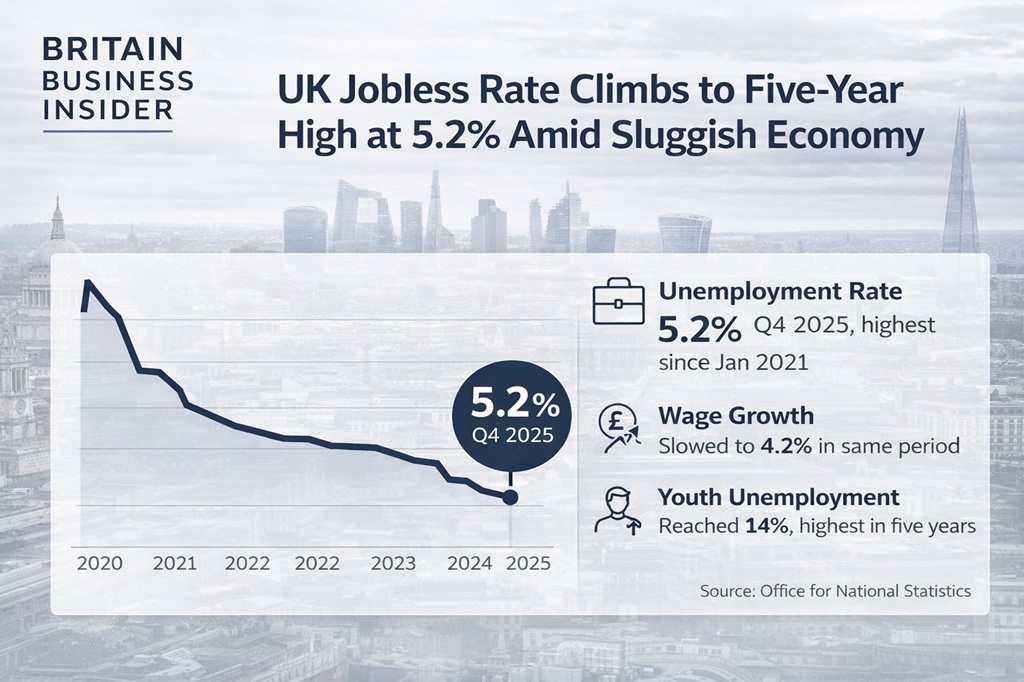
Given the UK’s heavy reliance on imported natural gas, the economy remains especially vulnerable to energy price shocks. This exposure could prolong elevated inflation levels and place additional strain on the labour market in the months ahead.
Analysts from the National Institute of Economic and Social Research warn that the latest surge in energy costs could undermine current momentum, with inflation likely to stay above target for longer and employment conditions potentially softening.
On a broader basis, economic output for the three months to February also rose by 0.5%, putting the UK on track for a relatively strong first-quarter performance — continuing a pattern seen in recent years.
However, this recurring early-year strength has raised questions among some economists about the accuracy of seasonal adjustment methods, particularly following the sharp distortions caused during the COVID-19 pandemic.
Despite these concerns, the Office for National Statistics maintains confidence in its data and statistical processes, insisting that the figures remain robust and reliable.